On using our senses to tap into the pleasure of writing
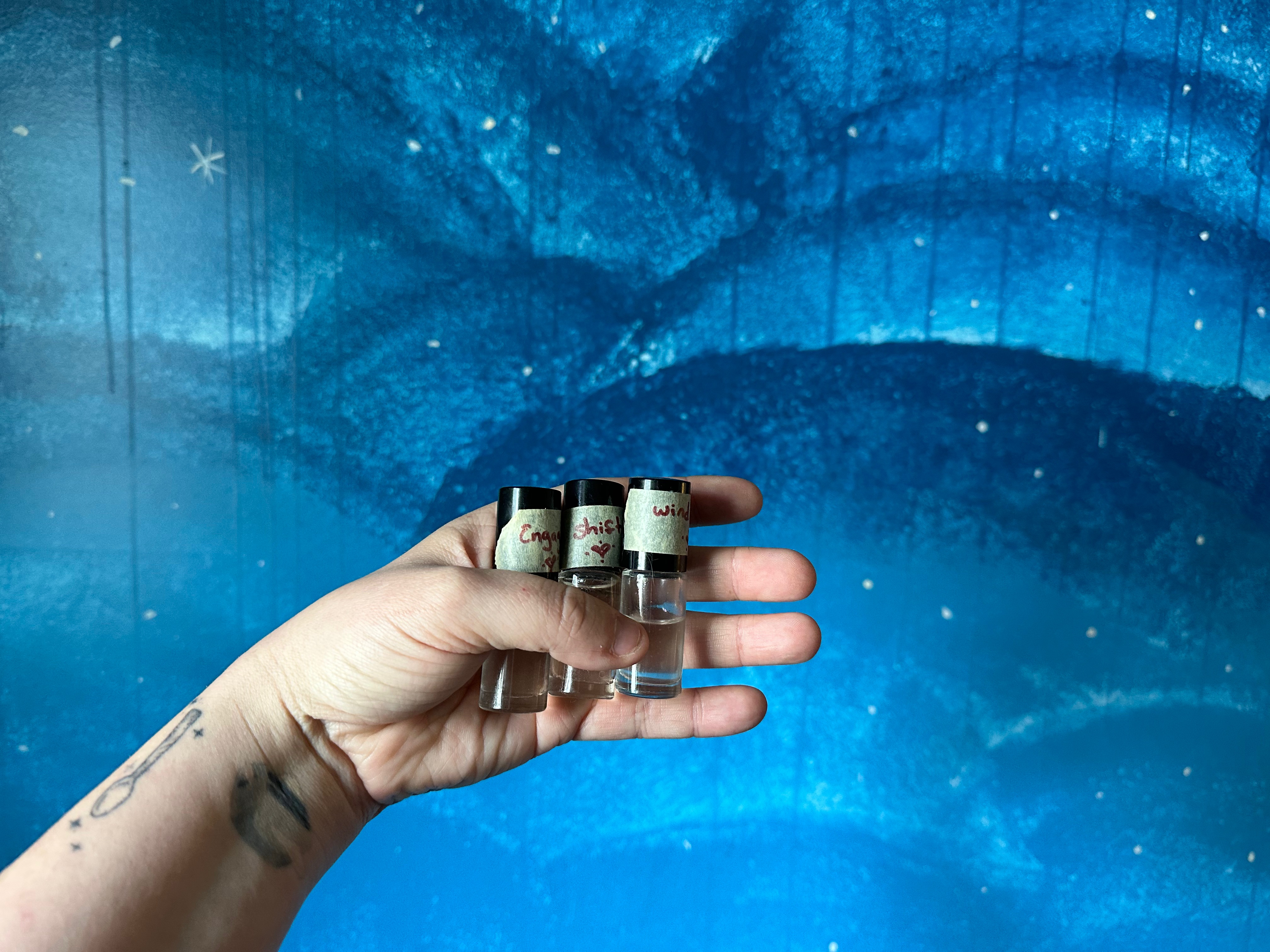
I am all about writing rituals (ask any of my clients or really, any writer who’s spent any time with me). Structuring a pleasurable container for my creative practice completely changed my relationship to creativity, and bringing in things I love (objects, sensory experiences, snacks, etc.) is a big part of that.
Many of us use sound for writing support (ambient noise, music, binaural beats, tree.fm, etc.), and maybe have some nice things to look at in our writing spaces, but what if we think of connecting all our senses to our writing time?
In the coming months, I’ll be sharing ideas for doing just that.
I want to start with scent because it’s probably the last thing most of my coaching clients think of when we build out their pleasurable writing rituals, but it ends up being one of the most transformative.
We know that scent is positively correlated with learning and retention, so it makes sense that building scent into your writing practice would have a positive effect.
In my experience, when you consistently use the same scent during writing time, it becomes associated with your writing practice, and primes you to get into your writing headspace.
And especially if you’re focused on building pleasure and fun into your practice, and you’re sticking with it consistently, you not really quickly drop into your writing headspace, but also into those good, cozy, productive, wonderful feelings you’re cultivating.
It’s pretty powerful to watch and experience.
You can incorporate scent into your writing routine in any number of ways: good smelling candles (for best effect, get the same scent each time), room spray, diffusers, incense.
My favorite, though, is making my own roll-on scents (find instructions for making your own here), which I can keep at my desk or pop in my bag when I travel.
Rather than using the same scent throughout my writing time, I employ different scents at different points in the writing process. This helps me move more quickly between parts of my writing practice, and to have a sense of closure at the end of writing, which helps keep my sacred, special writing time separate from the rest of my day.
I use a single scent in the background of each, which provides a consistent “it’s writing time” cue to my body (mine is orange), and then choose other scents to go with it.
In my case that looks like:
Engage: Rosemary and orange
Shift: Rosemary, orange, and lavender
Wind down: lavender and orange
Engagement is the moment I sit down to write, and is when I do my most energetic, generative, brainstormy work before anything else. I use rosemary here because it’s meant to be energizing and I definitely find it to be.
Shifting happens when I move towards other aspects of my writing practice like editing, writing footnotes, etc. You’ll notice I use all three scents here: A signal to my body that I’m still writing, but now adding to or transforming that generative work into a more polished form.
Winding down is the end of my writing time: The moment when I’m closing the laptop, or even just moving between writing time on the laptop and other things. Lavender is my forever favorite wind down scent in general, and also here.
Just having the sensory cue that I’m done with writing for today makes it so the energy of other parts of my work (email, admin, etc.) doesn’t bleed over into writing time (which is a big focus of my own practice and the help I give others, btw). Even if I’m still working on my laptop, I’ve created separation between writing and all the other laptop things I have to do that day.
If you’d like to dive deeper, I talk a bit more about ritual in my free Holding Space worksheet.
And if you want to work with me to build a pleasurable writing practice all your own, I’ve got some room in my 8-week book coaching program and for 1:1 ongoing support.
 Roots and Branches
Leave a comment