Writing about food, environment, and memory from our bodies and our minds
This is Roots + Branches, a newsletter on the craft and joy of writing and creativity by Root creator and award-winning author Dr. Julia Skinner. I hope it supports you in your creative journey!
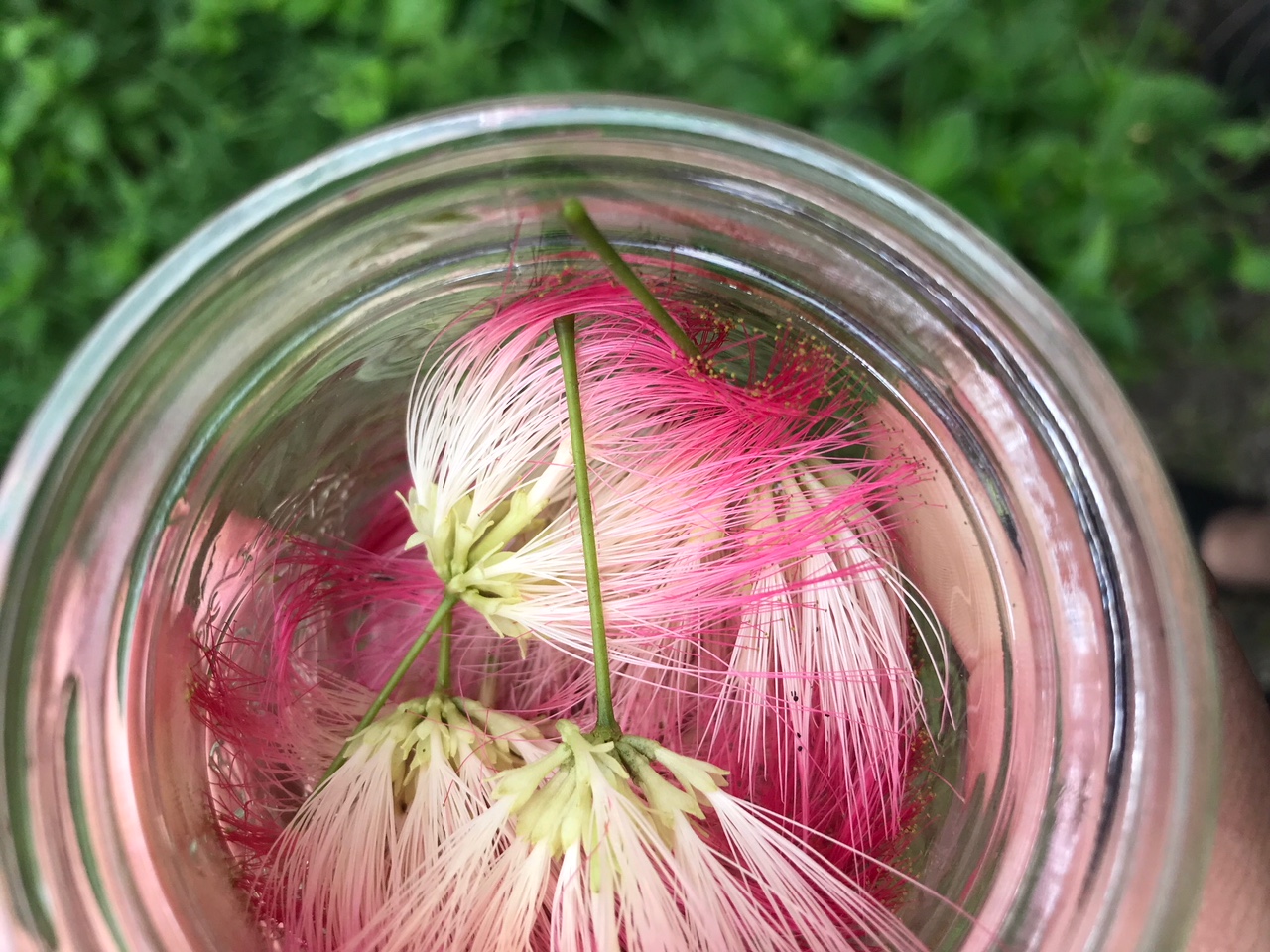
Writing Playground begins August 1st: And we’ve got a few spaces left!
Writing Playground is part generative writing time (no critique required) and part skill-building so you can expand the scope of your writing while deepening into a sustainable, pleasurable practice.
Please contact me for sliding scale pricing, or sign up below!
Embodied nonfiction
I’ve been thinking a lot about the embodiment of creative practice.
I engage in somatic practices every single day for myself, for both grounding and expansion, and it’s been an incredibly powerful habit that has let me ease into once-uncomfortable territory as a creator (like being filmed for interviews) much more easily than I otherwise would.
But how might we (and how do we) embody our work during the act of creating it?
Much of what I’ve seen about embodying our creative work comes from other disciplines, or from other branches of writing (like poetry).
So how might it look for nonfiction writers like me?
Jeannine Ouellette, while using poetry as an example, offers ways of approaching this that work for nonfiction, too:
” I believe to effectively capture embodiment in language means being open to, being willing to surrender to, the profound power of what I call “worker words” (plain, easy language) and images that are literal instead of metaphorical. It means, I suppose, letting our intellect, and, therefore, our egos, move out of the way in order to let real images speak for themselves, as themselves.”
She later goes on to add:
” it benefits us immeasurably—as writers and as humans—when we earn our metaphors by first sensing and then precisely and literally and plainly naming what we sense. That is, we benefit when we can acknowledge the elements of the sensory experience as it actually is, naming what I (and many others) call “the thing itself.” Naming the thing itself, practicing this simple task of sensing (seeing, hearing, smelling, touching, tasting) the world as it actually is, and articulating it that way, too, builds an embodied base for our writing in a way nothing else quite can.”
Nancy Reddy also recently shared a piece on writing and editing poetry from the body, in this case a guest post from Lindsay Lusby. She says,
“Those elusive elements that make a poem a poem are felt within our bodies just as much as (if not more than) our beautiful brains. And so it follows that much of the writing and revision process also lives within our bodies. If our brains are having a difficult time pinning down an intuitive process, something that moves just out of view the moment we think we’ve captured it, like a dream upon waking, I can almost guarantee you that this part of the process instead requires you to listen more deeply to your body—your heart and your lungs, your diaphragm and your gut, your arms and your legs—all those pieces of you that this humming electricity is constantly moving through. It’s the same general principle behind why taking a walk helps to refocus creative energies.”
With Lusby’s approach, there’s a sensory, embodied experience of the actual flow of words, which I like because it helps me sense the overall tone and shape of the piece. Imagining it as physical shape and movement helps my thinking brain get out of the way, letting my body meet and respond to the piece. She says,
“It’s more intuitive than it is strictly logical and it involves both looking at the poem on the page and reading it out loud—so in a way it’s an additional sense that is suspended between sight & sound. Like poetry feng shui. When reading a poem on the page, I’m both looking and listening for how the poem flows, whether the energy moves & circulates harmoniously or whether it feels blocked or obstructed in certain areas. And when I encounter even a little bit of the latter, I just move around the poem’s furniture until I feel like we’ve tapped into the poem’s natural sense of flow.”
With Ouellette’s approach, we’re allowing our sensory experience of the world to be the anchor that holds our work in place: We name the embodied experience, then we use that naming as the basis of description.
But that anchorage is not a limitation in Ouellette’s work: Instead, it gives us a tool for approaching our work that lets our mile-a-minute ego brain stand aside. We’re able to use our experience of moving through the world to imagine how (in fiction) we might move through the world in a hypothetical situation or, for nonfiction writers, to imagine how we would move through and experience the world if in the shoes of someone else (or, for memoir, of our past selves).
I like to think beyond this, too: Using my senses to imagine how plants and animals feel in an environment, rather than simply describing it (an earthworm tastes with its entire body, for example. What does that feel like?) When I start by imagining a scenario with my body: letting myself physically feel and sense and imagine before I start adding words, the words come more easily, and are much richer for having been given time to form behind the embodied experience of writing.
Has this resulted in polished, usable writing? Not a ton on its own, yet, though you’ll notice this weaves through the background of a lot of my writing.
But it has both deepened and expanded my relationship with the world immeasurably, which is frankly half the point of being a writer (the other half is a combination of many things, including helping to deepen and expand other people’s relationship with the world, for those of us who choose to share our work).
Embodying creative energy
Working with our bodies to actually draft and edit is a powerful practice, one that asks us to reimagine what it means to be a writer, since so much of what we do is very rooted in the logical, expressive parts of our minds.
But there’s another way I think of embodying my nonfiction work, and that’s by actually connecting in an embodied way to the energy of each project. Everything I write (including this), has its own energy, as unique as a fingerprint (yes, even for similar works, they’re not exactly the same): I like Elizabeth Gilbert’s reminder that choosing and manifesting ideas is a reciprocal act: In other words, we choose each other.
Here are ways that I work with this through my somatic practice (as always, take what works, leave what doesn’t work for you):
*Ask that creative project’s energy what it wants, or even what it is: I do this through freewriting, keeping my pen moving whole time, or listening to my body and asking where this work is rooted in my physical self (this might feel very foreign to you if you aren’t familiar with somatic work, but if you’re familiar with this practice, give it a try). And, once you locate the part of you that’s holding this work, listen to that place throughout your project and let it guide you.
*I check in with my body while writing and notice what feels expansive or constricted. Then, I’ll play around with the writing itself and see what physical changes I notice: Does rephrasing something help? Does playing with that actual physical shape of the piece (a la Lusby’s approach, above) open something up?
Eventually you’ll notice what feels resonant and move more fully towards that.
This is why I tap into meditation and pleasure practices like movement before and sometimes during writing sessions, because it allows me to witness how the energy of my work is moving through me, what feels stuck, what feels in flow.
But I also try to move outside my comfort zone generally and in a low stakes, playful way: There are plenty of studies that show that when we learn through play, we learn more quickly but also more deeply. Insights that would not be available to us from rote memorization or repetition are made available, allowing for us to synthesize knowledge more easily.
This means treating part of my writing time as playtime and letting that practice be really intuitively guided: moving towards whatever way I want to play that day. Maybe I listen to an audiobook while I go for a run, letting ideas come to me to get jotted down in my phone notes. Maybe I try to illustrate a piece of writing that I’m frankly not sure how to illustrate.
But always, my work is at its most powerful when I weave together the wisdom of my body and the intelligence of my thinking mind.
How do you practice embodiment in your writing?
And, P.S.: I’m considering adding two new classes to help you embody your writing practice:
1. A self-paced course on embodied nonfiction writing (or, possibly a version with virtual meetings?) Which has somatic practices like the ones I use, plus ways to use our senses to actually help us feel through the writing itself.
and
2. Food Writing Playground: Like my popular Writing Playground, but where each section of the course focuses on writing from a different sense (and, as the name implies, anchors those experiences in food, most of the time at least).
If these sound appealing to you, give this post a like or a comment (or hit ‘reply’) and let me know which one you want to see first!
Thanks for reading Roots + Branches!
I’m on a mission to help my fellow creatives build sustainable, joyful writing practices that give their biggest, most magical, and important ideas space to come to light.
You can support my work by sharing this newsletter, pledging your support, or joining one of my group of 1:1 writing support spaces I offer throughout the year.
Thank you for your support, and happy writing!
 Roots and Branches
Leave a comment