An invitation to reflect on how your work is held and cherished
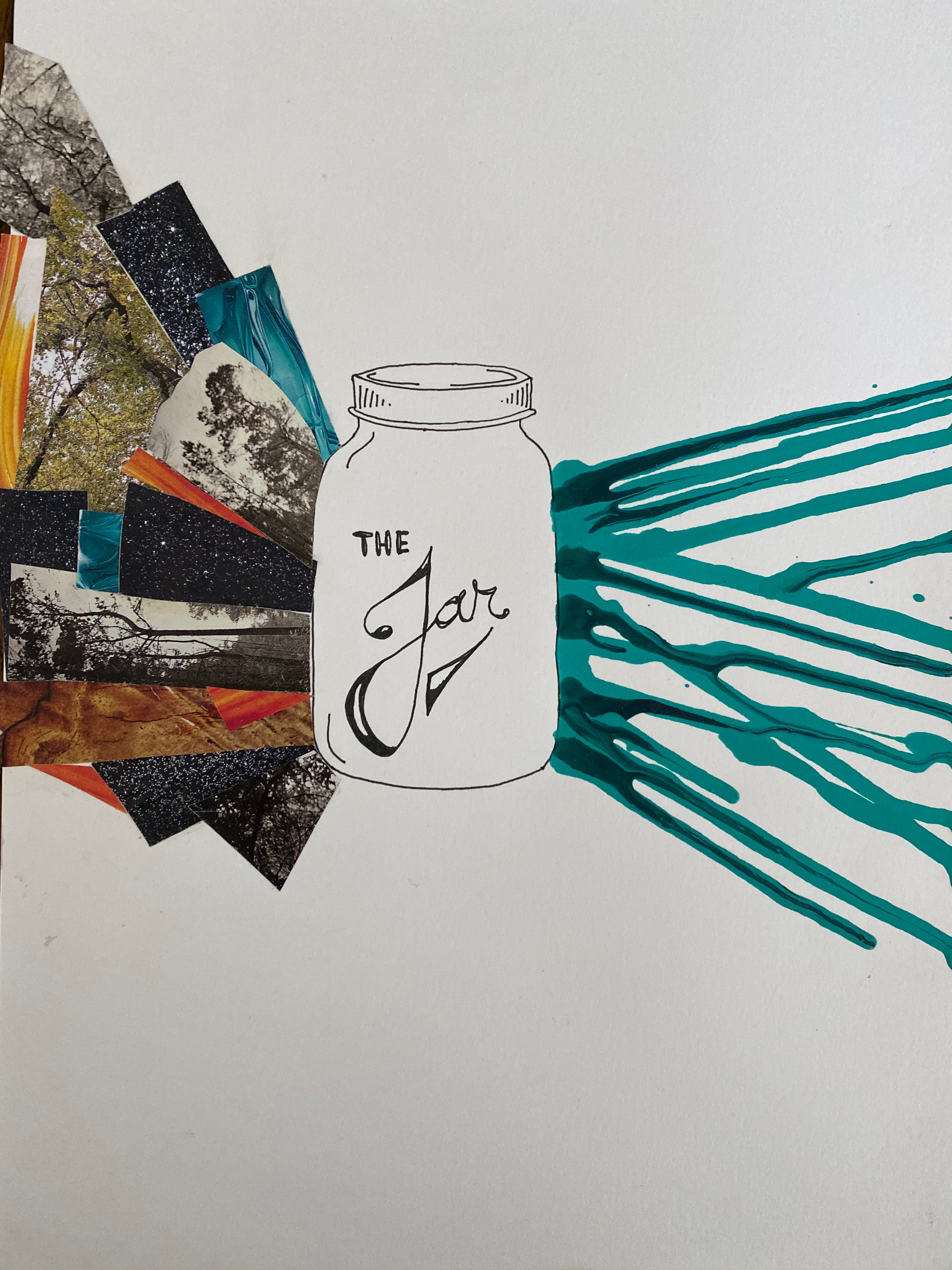
I’ve been thinking a lot about what it means to make a container for your creative work.
What does it mean to contain, without restricting? This is the first but almost certainly not the last time I’ll be noodling on that here, and I’d love to hear your thoughts, too.
For me, this is less about definitive answers than it is about finding the answers that serve each of us, and in my case, using conversation and connection with others to find out what that means for each of them.
Part of what inspired this week’s line of thinking was Container Magazine’s explanation of why they chose their name:
The name and ethos of the magazine is inspired by Ursula LeGuin’s essay The Carrier Bag of Fiction in which she tells the story of the container: the most humble, the most useful and quite possibly the first thing the human race invented. The container is the bag you put things in because they are “useful, edible, or beautiful” and because you want to share them with your community. It signifies what it is to be collectively human – expansive, communal, representational, and more about process than destination.
Ursula K. Le Guin thinks in terms of a life story:
“A book holds words. Words hold things. They bear meanings. A novel is a medicine bundle, holding things in a particular, powerful relation to one another and to us.”
In Le Guin’s world, a given work (in her case, a novel) is not just the conveyor of information but is also a relationship builder: Through the story conveyed, relationships between people are deepened and critical knowledge passed on. Stories are how we used to (and sometimes still do) pass on traditions and skills. The story then becomes a container, one that holds those kernels of information so they can be shepherded forward to their next port of call.
But the life story, that is, our overall lived experience and the act of living itself, is also a container.
Since creativity is, for me (and probably also for you) an un-entangleable aspect of our larger lives, it’s not much of a leap to view the creative aspects of ourselves as offering critical materials to weave into this container.
So what does it mean to view our creative practice as a container for our work? Or for our ideas, not yet formed into cohesive projects? What does it mean to have a safe bundle in which to carry the medicine of our creativity?
Your creative ecosystem as a container that holds the work that’s moving through you
Creative ecosystems are spaces inside ourselves that we can imagine as a container to hold the essence of our creativity, as well as the specific creative projects we might choose to undertake.
In a creative ecosystem that’s thriving and regenerative, the space is treated as separate and sacred, though still intertwined with our larger lives.
Think of a nature preserve: It’s not fundamentally separated from the world around us, but we approach it differently. You (hopefully) don’t throw trash around, or raze it to the ground for condos.
It’s a place respected for the value inherent in its existence, and allowed to thrive specifically because its thriving benefits the world: And by recognizing that value and cultivating a relationship with that place, its value increases exponentially (value here isn’t a capitalist input/output thing, but value in terms of cultivating wonder and deepening the richness of life).
In our creative ecosystem, this value has nuance, but it’s also a place where we can witness and be a part of the unfolding of natural cycles, to guide our energy and attention towards specific projects, to create a soft place for ourselves and our ideas to land.
So what does a container mean in this context?
What do you think of when you think of a container? Fundamentally, containers contain things. They hold them, they protect them from damage, they keep them in their own place and help keep things organized.
When we view our creative ecosystems as a container, we aren’t trying to separate and contain things in the same way as dumping leftovers into a tupperware and resigning them to molder in the back of the fridge.
Instead, our container gives our work pride of place in our lives while keeping that work safe from bumps and bruises:
Think of it as a bowl of perfectly ripe fruit on the counter, that you can grab from and enjoy but that also keeps the fruit in its own place where it’s kept safe from being knocked around or crushed, while still being beautiful to behold.
Our creative ecosystems operate like that bowl of fruit: Giving us space and protection from other things that pull energy and attention away from creativity (including self-imposed distractions, like a too-packed daily schedule full of busywork or a habit of doomscrolling), while also giving the creative energy held within that container space to fully be itself.
We don’t demand that the fruit in our bowl be different than it is, we appreciate it, we savor it, and we put it to work in our lives in some way (as food, as well as decoration in this instance).
The same is true of the container for your creativity: Building a sustainable container to hold your creative practice has nothing to do with building a container the ‘right’ way, and everything to do with building a container that is the right way for you.
For example:
-Setting boundaries: Each of us have different boundaries we need to set to protect our creative time from other impositions, including boundaries with ourselves.
-And leaving room to groove: In an actual ecosystem, you feel free to move around a bit: Even if you stay on a trail, there is still flexibility to notice different things and explore in new ways. And if you visit the same trail multiple times, you’ll probably notice something new with each visit. Give yourself that same flexibility in your creative time, too, saving space for ideation, daydreaming, and brainstorming, and giving those precedence over just pushing out finished projects.
Notice, over time, how this works for you: And where in your creative process you find you benefit most from some unstructured creative time to just let ideas form and gel in their own time (for me, this is an iterative process from the beginning to middle of most projects, with the end just being, well, a time to tie up loose ends).
I structure every single program I offer with this concept of a container in mind, and each skill we learn is another thread woven into the fabric, each informing and strengthening the others:
Routines give us a ‘when’ for creative work sessions, while boundaries help us hold that time in our days. Clear goals tell us what goes into the routine, when. And other practices, like rituals, give us access to the creative pleasure that is our birthright and helps us weave it more deeply into our days.
Build your own container with me:
For writers:
In Bloom, an 8-week program where we cover all of this and more, and you’ll leave with a container to hold your creative practice for the rest of your life.
Suitable for writers at all stages, from professional writers looking to reconnect to their work, to brand new writers looking to build sustainable habits from the get go. Writers working in all genres and formats welcome!
For creatives from all backgrounds and interests: If you want to build your unique, sustainable container in one day, my full-day private sessions will give you the groundwork, structure, and skills you need so you leave with a clear, cohesive container that works the way you work (plus the take-home resources and skills to keep going).
I’m offering these full-day virtual sessions, plus customized take-home resource library, for just $795 in the month of August only (that’s over $1000 off), and only to newsletter subscribers.
If you’re a paid subscriber, you get another $100 off, meaning a full-day session is just $695 this month.
Shoot me an email (julia@root-kitchens.com) to claim your spot.
I also offer elements of container-building in every single one of my self-paced classes, which give you an accessible and powerful way to experience my work in bite-sized chunks. See all of those below, and let me know if you want some guidance picking the perfect class for you!
 Roots and Branches
Leave a comment